

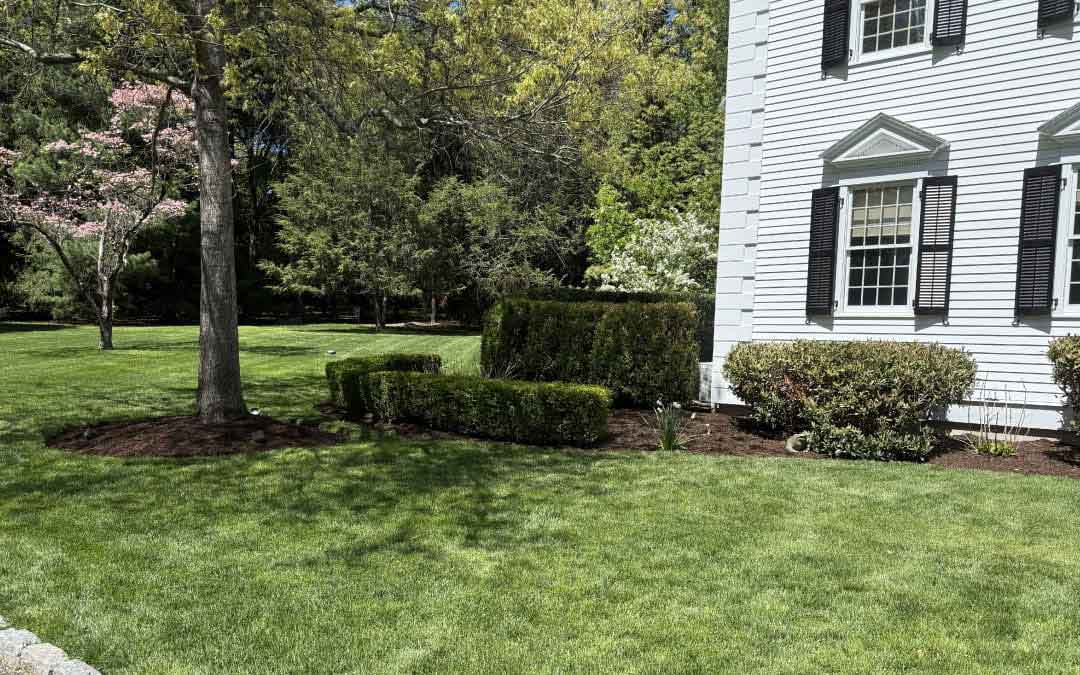
A well-placed tree can completely change the feel of your property. It might provide shade over your favorite outdoor space, create privacy from neighboring homes, or bring beautiful color to your yard as the seasons change.
And if you’ve been thinking about adding a large tree or new shrubs to your landscape, you might not need to wait until spring.
For homeowners considering tree planting in Greenwich, CT, fall can be one of the best times to get started. The cooler weather is easier on newly planted trees and shrubs, while the soil still holds some of the warmth from summer. Together, these conditions can give roots a chance to grow before winter arrives.
That early start can make a difference when the next growing season begins.
Of course, successful planting involves more than choosing the right season. The type of tree or shrub, where it’s planted, and how it fits into your landscape all matter.
At New England Total Landscaping, we look at planting as part of the bigger picture. Whether you’re adding a statement tree or redesigning an established garden, the goal is to choose plants that complement your property and continue to look beautiful as they grow.
Why Is Fall a Good Time to Plant Trees and Shrubs?
Spring might be the season most people associate with planting, but fall has some advantages worth considering.
During summer, newly planted trees and shrubs have to deal with higher temperatures and greater moisture demands. That can make it harder for them to adjust to their new surroundings.
Fall brings cooler air, which helps reduce some of that stress. At the same time, the soil often stays warmer than the air, allowing roots to keep growing even as the plant’s visible growth begins to slow.
For many deciduous trees and shrubs, this creates an opportunity to start developing roots in the surrounding soil before winter.
By the time spring arrives, those plants may already have made some progress settling into their new location.
That’s the main benefit of fall tree planting. Rather than beginning the adjustment process during the warmer months, many plants can get an earlier start while growing conditions are relatively mild.
However, fall isn’t necessarily the best choice for every tree or shrub. Some species are better planted in spring, and planting too late in the season can leave roots with little time to establish before the ground freezes.
The best approach is to choose plants that suit your property and install them when conditions are right.
How Does Fall Planting Give Large Trees a Head Start?
Planting a large tree isn’t quite the same as planting a small shrub.
There’s more to think about, from the size and condition of the root ball to how the tree will be transported and installed. And because a large tree can become a defining feature of your landscape, getting the details right from the beginning matters.
When a nursery-grown tree is planted, its roots need time to adjust and begin growing into the surrounding soil.
Fall’s cooler temperatures can make that transition easier for many deciduous species. Even after a tree begins losing its leaves, its roots may continue growing as long as the soil remains warm enough and has adequate moisture.
That doesn’t mean the tree will become fully established before winter. Root establishment takes time, especially for larger trees.
But if the planting is done early enough and conditions are favorable, the tree may have a head start when spring arrives.
It’s also worth remembering that bigger isn’t always better. A healthy, appropriately sized tree that’s well suited to your property may establish more successfully than a much larger specimen that requires more time and care to adjust.
Choosing the right tree, rather than simply the largest one available, is an important part of planning a successful planting project.
What Should You Consider Before Planting a Big Tree?
It’s easy to picture how a beautiful tree might transform your property. But before deciding where to plant it, think about how much space it will need in 10 or 20 years.
Will its branches eventually reach the house? Could it block sunlight from a patio or garden? Is there enough room for its roots to grow without interfering with nearby structures?
These are the kinds of questions worth asking before the tree goes into the ground.
The tree’s mature height and spread, sunlight needs, soil conditions, and drainage should all influence its placement. Nearby driveways, walkways, utility lines, existing trees, and outdoor living areas also need to be considered.
For homeowners in Greenwich and Stamford, this is particularly important on established properties where mature trees, stonework, gardens, and patios are already part of the landscape.
In New Canaan and Darien, a large tree might be used to frame a driveway, provide privacy, or complement existing trees and garden areas. Properties in Westchester County may have their own challenges, including slopes, drainage concerns, and limited planting space.
No two properties are exactly alike, which is why a planting plan should start with understanding the landscape and what you want to accomplish.
A thoughtful landscape design plan can help you choose trees that look right in their surroundings while giving them the space and conditions they need to grow.
Which Trees and Shrubs Are Right for Fall Planting?
There’s no single list of trees and shrubs that works for every property.
Many deciduous trees and shrubs can be good candidates for fall planting. As their above-ground growth slows for the season, cooler conditions can reduce some of the stress associated with being moved to a new location.
Evergreens need a little more consideration.
Unlike deciduous trees, evergreens keep their foliage through winter. That means they can continue losing moisture even when the weather is cold. If their roots haven’t had enough time to adjust, they may be more vulnerable to winter drying.
Some needled evergreens can be planted successfully in early fall, while certain broadleaf evergreens are often better suited to spring.
The condition and type of nursery stock also matter. A container-grown shrub may allow more flexibility in planting time, while a large balled-and-burlapped tree often requires more careful scheduling and handling.
It’s also important to match the plant to your property’s conditions.
A tree that prefers well-drained soil may struggle in an area where water regularly collects. Shrubs planted for privacy need enough sunlight and growing space to develop properly.
Deer activity, winter exposure, and the amount of maintenance you’re comfortable with should also be part of the decision.
The right plants should do more than look attractive at the nursery. They should make sense for your property and the way you want to enjoy it.
How Can Large Trees and Shrubs Improve Your Landscape Design?
Trees and shrubs can do much more than fill empty spaces in your yard. When they’re thoughtfully selected and placed, they can change how your outdoor areas look and feel.
Maybe your backyard patio feels a little too exposed to neighboring properties. A carefully planned grouping of shrubs could create a softer, more private setting as the plants mature.
Perhaps the front of your home would benefit from a large ornamental tree that adds seasonal color and frames the entrance.
Or maybe you have a spacious lawn that could use a little shade and a more natural transition into the surrounding landscape.
The best planting choices depend on what you want your property to become.
At New England Total Landscaping, we start by understanding your property and how you’d like to use it. We consider the existing layout, sunlight, drainage, mature plant sizes, and surrounding landscape features before developing recommendations.
Our landscape design services focus on creating outdoor spaces that balance beauty, function, and ongoing maintenance.
We also think about what happens after the plants are installed.
Trees mature. Shrubs fill out. Gardens change with the seasons.
A well-planned landscape gives each planting room to grow while helping everything work together as the property evolves.
When Is the Best Time for Fall Tree Planting in Connecticut?
Fall can be an excellent planting season in Connecticut, but timing matters.
Early fall generally offers a more favorable window for many trees and shrubs because the soil is still relatively warm and there’s more time for roots to begin developing before winter.
As the season progresses, that window becomes shorter.
According to the University of Connecticut’s tree and shrub planting guidelines, the best planting time depends on the species and whether the plant is container-grown, balled-and-burlapped, or bare-root.
Many deciduous trees can be planted in spring or fall when conditions are suitable. Evergreens often require more selective timing, particularly as colder weather approaches.
For larger trees, it’s especially important not to rush the process.
Just because the ground can still be dug doesn’t mean every tree or shrub should be planted. The condition of the root system, soil moisture, drainage, and the weather forecast all influence whether installation makes sense.
If the season is too far along for a particular tree, fall can still be a good time to plan the project, choose the right plants, and prepare for spring.
The goal isn’t simply to get the tree into the ground before winter. It’s to give it the best possible start.
What Does Proper Fall Tree Planting Involve?
Even a healthy tree can struggle if it isn’t planted correctly.
Good planting starts with the location. The soil needs to drain appropriately, the tree should receive enough sunlight, and there should be room for its roots and branches to grow.
Planting depth is another important detail.
The root flare, which is the area where the trunk widens at the base, should remain at the proper level near the soil surface. Planting too deeply or covering the trunk with excess soil can create problems as the tree grows.
The roots also need attention before installation. Container-grown plants sometimes develop circling roots, while larger balled-and-burlapped trees require careful handling to protect the root ball.
Once the tree is planted, proper watering helps settle the surrounding soil and provides moisture for the developing root system.
Mulch can also help retain moisture and moderate soil temperatures. However, it should be spread at an appropriate depth and kept away from direct contact with the trunk.
These steps might not be the most noticeable parts of a planting project, but they can have a lasting impact on how well the tree establishes.
And proper installation is only the beginning. Newly planted trees and shrubs will still need care as their roots continue growing into the surrounding soil.
How Should You Care for Newly Planted Trees and Shrubs Before Winter?
One common mistake is assuming that newly planted trees and shrubs don’t need much water once the weather turns cooler.
In reality, roots still need moisture to establish, even when the air feels cold.
New plantings generally need watering as appropriate until the ground freezes. How often depends on the type of plant, soil conditions, recent rainfall, and drainage.
The goal is to keep the root area adequately moist without leaving the soil waterlogged.
Evergreens may need additional attention because their foliage continues losing moisture during winter. Depending on the species and planting location, protection from drying winds, winter sunlight, or deer browsing may also be helpful.
It’s also a good idea to check that mulch isn’t piled against trunks and stems.
Once spring arrives, watering and monitoring should continue as needed. A tree may look healthy above ground while its roots are still adjusting to the new location.
As trees mature, ongoing tree care services can help maintain their health, structure, and appearance.
Planning Your Fall Tree Planting Project in Greenwich, CT
Adding a large tree or a group of shrubs is an opportunity to make a lasting improvement to your property.
Whether you want more privacy, shade, seasonal beauty, or a landscape that feels more complete, the right plantings can make your outdoor spaces more enjoyable for years to come.
For homeowners in Greenwich, Stamford, New Canaan, Darien, and surrounding Fairfield County communities, fall can be a great time to explore those possibilities. Similar seasonal considerations apply to properties in nearby Westchester County, although conditions can vary from one location to another.
But a successful planting project starts with more than finding a beautiful tree.
It’s about choosing something that fits your property, placing it where it can thrive, and understanding what it will need as it grows.
At New England Total Landscaping, we believe a beautiful landscape should be something you enjoy, not something you have to worry about. That’s why we look beyond planting day, considering how new trees and shrubs will complement your property, grow over time, and fit into your long-term landscape care.
A new tree should do more than look beautiful on planting day. With the right selection, proper installation, and ongoing care, it can become a lasting part of your property’s character.
If you’ve been thinking about adding a large tree, creating privacy with shrubs, or refreshing an established landscape, fall is a good time to explore your options, even if certain plantings are better scheduled for spring.
Ready to bring your planting ideas to life? Contact New England Total Landscaping to discuss your property and find out what makes sense for your landscape.


